A beautifully styled home has very little to do with how much was spent on it. After styling more than 300 homes across the Gold Coast and Northern NSW, we can tell you that the rooms that look the most expensive are rarely the ones with the biggest budgets. They are the ones where every decision was made in the right order. This is a home styling guide Australia-wide homeowners and renters can put to work straight away, built on the same method our stylists use on every project.
Budgets are front of mind for most households right now. The latest ABS Monthly Household Spending Indicator shows spending on furnishings and household equipment fell 0.6% in August 2026, even as total household spending held flat. Australians are thinking twice before buying the new sofa, and that caution is healthy. Spending less is not the problem. Spending in the wrong places is.
In this guide you will learn how a stylist sets a budget, the free moves that do most of the work, the low-cost upgrades that read as high-end, the handful of pieces worth paying for, and how to source smart in Australian conditions. We also cover styling as a renter, the mistakes that quietly cost you more, and when a professional consultation is the most budget-conscious decision you can make.
What Is Budget Home Styling (and What It Isn’t)?
Home styling is the art of arranging, layering and finishing a space so it looks considered and feels good to live in. It sits between decorating, which is often about buying things, and renovating, which is about changing the structure. Styling works with what the room already is and makes it read at its best.
That distinction matters when money is tight. Renovating a living room might cost tens of thousands of dollars. Styling the same room is mostly about decisions: what stays, where it sits, how it is lit, and what gets layered on top. Many of those decisions cost nothing at all.
Budget styling is also not the same as cheap styling. A room filled with bargain pieces that fight each other will always look cheaper than a room with fewer, well-chosen items. The goal is not the lowest possible spend. It is the highest possible impact for every dollar you do spend.
Set Your Budget the Way a Stylist Would
Before you open a single shopping app, decide how the money will flow. Stylists never start with the shopping list. They start with the sequence.
Spend in the right order
Work through three tiers, and do not move to the next until the current one is finished:
- Free: edit, declutter, rearrange and move pieces between rooms.
- Low cost: lighting tweaks, soft furnishings, greenery, paint and small hardware.
- Invest: the few anchor pieces that shape the whole room, such as the sofa, rug and main light source.
Following this order stops you buying a new coffee table for a room that only needed the old one moved. It also means that by the time you reach the investment tier, you know exactly what the room is missing.
Prioritise the rooms that matter most
If your budget cannot stretch to the whole house, start where you and your guests spend the most time. The living room is the obvious choice. Buyers agree: the National Association of Realtors’ 2025 Profile of Home Staging found the living room is the most important room to stage for buyers (37%), followed by the primary bedroom (34%) and the kitchen (23%). Whether you are styling to live or to sell, those three rooms return the most for the least.
Use a simple split for your investment budget
As a rule of thumb for a single living space, we suggest weighting the spend like this. It is a starting point rather than a formula, so adjust it to what your room already has:
| Category | Share of budget | Why |
|---|---|---|
| Anchor pieces (sofa, rug) | 50% | Used daily and they set the scale of the whole room |
| Lighting | 15% | The fastest route to atmosphere and depth |
| Soft furnishings and texture | 15% | Cushions, throws and curtains make a room feel finished |
| Art and statement decor | 10% | One strong piece gives the room its identity |
| Greenery and finishing touches | 10% | Life, softness and the final layer |
The Free Styling Moves That Do the Most Work
This is where most of the transformation happens, and it costs only an afternoon.
Edit before you add
Every professional styling job begins with subtraction. Clear every surface completely, then allow back only two or three considered items per surface. Remove the chair nobody uses, the third side table and the basket of cables. Space is the most luxurious thing a room can have, and it is free. A single larger object will always look more expensive than five small ones scattered around it.
Rearrange and shop your own home
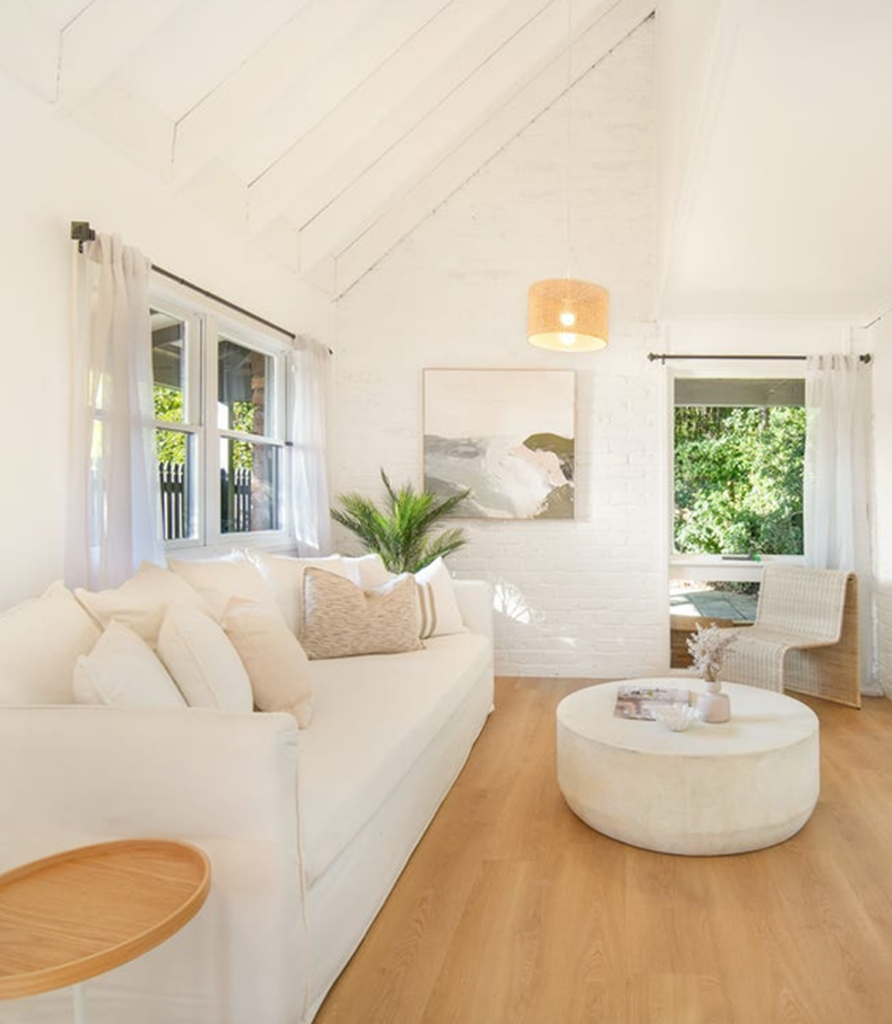
Pull the sofa off the wall, even by 20 or 30 centimetres, and group seating into a proper conversation zone. Choose a focal point on purpose: a view, a window or a fireplace rather than the television by default. Then walk through the house and “shop” it. The lamp in the spare room, the vase in the linen cupboard and the artwork leaning in the garage can all earn a new role somewhere more visible. For a step-by-step look at layout, our guide to living room styling ideas walks through the exact sequence we follow.
Fix the light you already have
Switch off the downlights and turn on the lamps. Overhead light alone flattens a room, while pools of lamp light at different heights create depth. If your globes are cool white, swapping them for warm white (around 2700K to 3000K) is one of the cheapest upgrades in this entire guide. Open blinds fully during the day, clean the windows, and move any mirror so it catches a window and bounces light back into the room.
Low-Cost Upgrades With High-End Impact
Once the free work is done, a modest spend goes a long way. These are the upgrades we reach for first when a client wants maximum change for minimum outlay.
Paint with restraint
A tin of paint is still the best-value transformation there is. Keep walls, ceilings and trims in the same tonal family, such as warm white into soft stone, so the eye travels without interruption and the room reads larger. Save stronger colour for a single feature: a painted door, a bookshelf backing or a vintage chest of drawers.
Hang curtains high and wide
Mount the rod as close to the ceiling as you can and extend it well past the window frame on both sides. Full-length sheers in linen or a linen-look weave make ceilings feel taller and windows feel wider, and they soften Queensland’s strong afternoon light. Ready-made sheers hung properly look far more expensive than custom curtains hung too low.
Layer texture
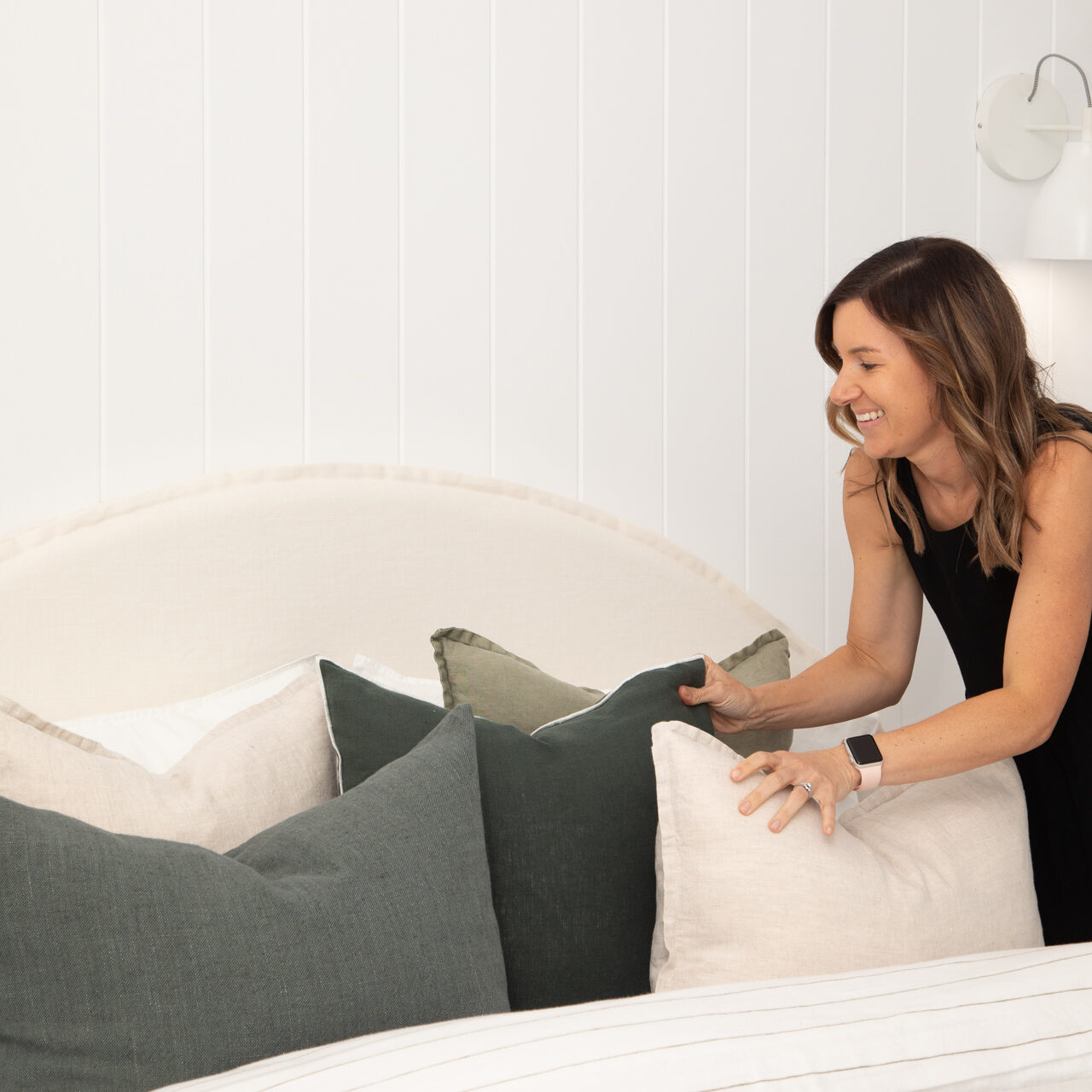
Texture is the cheapest luxury lever you can pull. A neutral room without it looks flat and unfinished, while the same room layered with linen, boucle, wool, rattan and ceramic looks considered. Refresh cushion covers rather than whole cushions, add one chunky throw, and mix matte with soft and polished finishes. Our piece on texture, tone and timber in coastal luxury interiors goes deeper on the materials doing the most work in 2026.
Bring in something living
One generous plant or a vase of foliage cut from the garden adds colour, height and life that no ornament can match. On the Gold Coast, hardy options that tolerate bright indirect light and humidity will outlast fussier species and save you replacing them.
Swap the small hardware
Tired cabinet handles, a dated light switch plate or a mismatched set of hooks can quietly cheapen a room. Replacing hardware in a kitchen or bathroom is inexpensive and reads instantly as an upgrade.
Where to Invest: The Pieces Worth Paying For
Styling on a budget does not mean never spending properly. It means spending properly on the few things that carry the room, and saving everywhere else.
- The sofa: it is used every day and it sets the tone of the space. Prioritise a solid frame and a removable, washable cover over a designer label. Think in cost per use: a sofa that lasts ten years is far cheaper per sitting than one that sags in two.
- The rug: the most commonly mis-sized item in Australian homes. Buy big enough that at least the front legs of every seating piece sit on it. A large, simple jute or wool-blend rug beats a small patterned one every time.
- Lighting: one quality floor lamp and one table lamp will change a room more than any accessory. Look for warm, diffused light and a shade that suits the room’s scale.
- One piece of art: a single oversized artwork above the sofa or bed delivers gallery-level impact. A large print in a good frame is a budget-friendly way to get there.
Where can you save? Side tables, decorative objects, cushion inserts, baskets, vases and occasional chairs are all excellent candidates for second-hand or budget retailers. Nobody can tell the price of a ceramic bowl from across the room, but everyone can feel a sofa that has lost its shape.
Sourcing Smart: A Home Styling Guide for Australian Homes and Climates
Where you buy matters as much as what you buy, and Australian conditions add a few rules of their own.
Go second-hand for character
Facebook Marketplace, Gumtree, op shops, local auction houses and estate sales are full of solid timber furniture that costs less than new flat-pack and will outlive it. Vintage pieces also add the one thing a showroom look always lacks: character. Mixing one or two pre-loved pieces into a room is what makes it feel curated rather than bought in a single weekend.
Do inspect before you pay. The ACCC notes that most consumer guarantees don’t apply to one-off sales between two people where the seller isn’t running a business. Check joints, drawers and upholstery in person, sit on anything you plan to sit on, and bring a tape measure.
Mix high and low
The most convincing budget rooms combine a few quality pieces with affordable basics. A second-hand timber sideboard, a new budget-friendly linen cushion and one splurge ceramic can sit together beautifully, as long as they share a palette. Keep to three or four tones across a room and the price points disappear.
Buy for the climate
Humidity, salt air and strong UV are hard on furniture in coastal Queensland and Northern NSW. Natural fibres such as linen, cotton, jute and wool breathe better than many synthetics. Solid timber and quality veneers handle humidity far better than cheap particleboard, which can swell at the edges. Keep upholstered pieces out of direct afternoon sun, or choose lighter fabrics that show fading less. Buying once for the conditions is cheaper than buying twice. If you love the relaxed coastal look, our guide to getting the coastal interior style shows how to achieve it without a full refit.
Styling on a Budget When You Rent
Renters can create a styled home too, but the rules are different. In Queensland, the Residential Tenancies Authority treats fixtures, including picture hooks, as items that need the property manager’s or owner’s written approval before they go in. Always ask first, in writing, rather than risk your bond.
In the meantime, focus on changes that leave no trace:
- Lean, don’t hang: oversized mirrors and artwork leaned on a sideboard or the floor look relaxed and intentional.
- Layer over what you cannot change: a large rug hides a tired carpet, and a throw disguises a dated sofa.
- Swap the soft furnishings: curtains on tension rods, new bedlinen and cushions are fully portable to your next home.
- Invest in lamps: plug-in lighting fixes a room with poor ceiling lights and comes with you when you move.
Budget Styling Mistakes That End Up Costing More
These are the errors we see most often, and each one usually leads to a second purchase:
- Shopping before editing: buying new pieces for a room that only needed clearing and rearranging.
- Buying the room in one weekend: matching sets from a single store look like a showroom. Build slowly and the room feels collected.
- Going too small: undersized rugs, art and lamps make a room feel busy and cheap. Fewer, larger pieces always win.
- Skimping on the sofa: the one piece you use every day is the one most likely to need replacing early if it is poorly made.
- Forgetting to measure: a bargain that does not fit the space, the doorway or the stairwell is not a bargain.
- Chasing trends: a room built around this season’s colour dates quickly. Build a calm base and let trends live in cushions and flowers.
When a Professional Consultation Is the Budget-Smart Move
It sounds counterintuitive, but paying for expert advice is often the cheapest way to style a home well. The most expensive mistakes in styling are the purchases that do not work: the wrong-sized sofa, the rug that clashes, the paint colour that turns green in coastal light. One or two of those can cost more than a consultation.
That is exactly why we created Style to Stay. A stylist visits your home, measures the space and learns your brief, budget and lifestyle. You then receive two moodboard directions per room and a complete shopping list with purchase links, so you know exactly what to buy before you spend a dollar. Packages start from $550, and you can use existing pieces, second-hand finds and budget retailers alongside anything new. If you would like us to handle the ordering and setup as well, that is available too.
If you are styling to sell rather than stay, the maths changes again. Our Style to Sell staging service presents your home to buyers without you buying a single piece of furniture, and you can see the results across our recent projects.
Frequently Asked Questions
How can I make my home look expensive on a budget?
Focus on space, light and texture before furniture. Declutter hard, float your seating into a zone, switch to warm lamp lighting, size up your rug and layer natural textures like linen and wool. Most of what makes a room look expensive comes from restraint and scale rather than the price tag of the pieces in it.
What should I spend the most money on when styling a home?
Spend on the pieces you use every day and that set the scale of the room: the sofa, the rug and your main lighting. Save on decorative objects, side tables and accessories, which are easy to find second-hand. A single quality anchor piece will lift everything around it.
Where should I start when styling a home on a budget?
Start with the free work: edit, declutter and rearrange what you already own. Then fix the lighting, add low-cost soft furnishings and greenery, and only then invest in anchor pieces. Starting with the living room gives you the biggest return for the least outlay.
Can renters style a home without losing their bond?
Yes. Focus on portable, no-trace changes such as leaning art and mirrors, layering rugs and throws, swapping soft furnishings and adding plug-in lamps. In Queensland, fixtures such as picture hooks need written approval from the property manager or owner first, so put any request in writing.
Is hiring a home stylist worth it if I’m on a budget?
Often, yes, because a stylist helps you avoid the purchases that do not work. Our Style to Stay packages start from $550 and include an in-person consultation, two moodboards per room and a shoppable list, so every dollar you spend afterwards goes toward the right pieces. Avoiding a single wrong sofa or rug can easily outweigh the cost of the consultation.
Final Thoughts on This Home Styling Guide
Styling a home on a budget is not about compromise. It is about sequence. Edit first, rearrange second, fix the light, layer texture, and only then invest in the few pieces that carry the room. Source smart, buy for the climate, and let the room build over time. Follow that order and a modest budget will look far more considered than a big one spent in a hurry.
If you would rather have a stylist’s eye on your space before you spend, we would love to help. Book a consultation and we will show you what your home could become, moodboards and shopping list included.