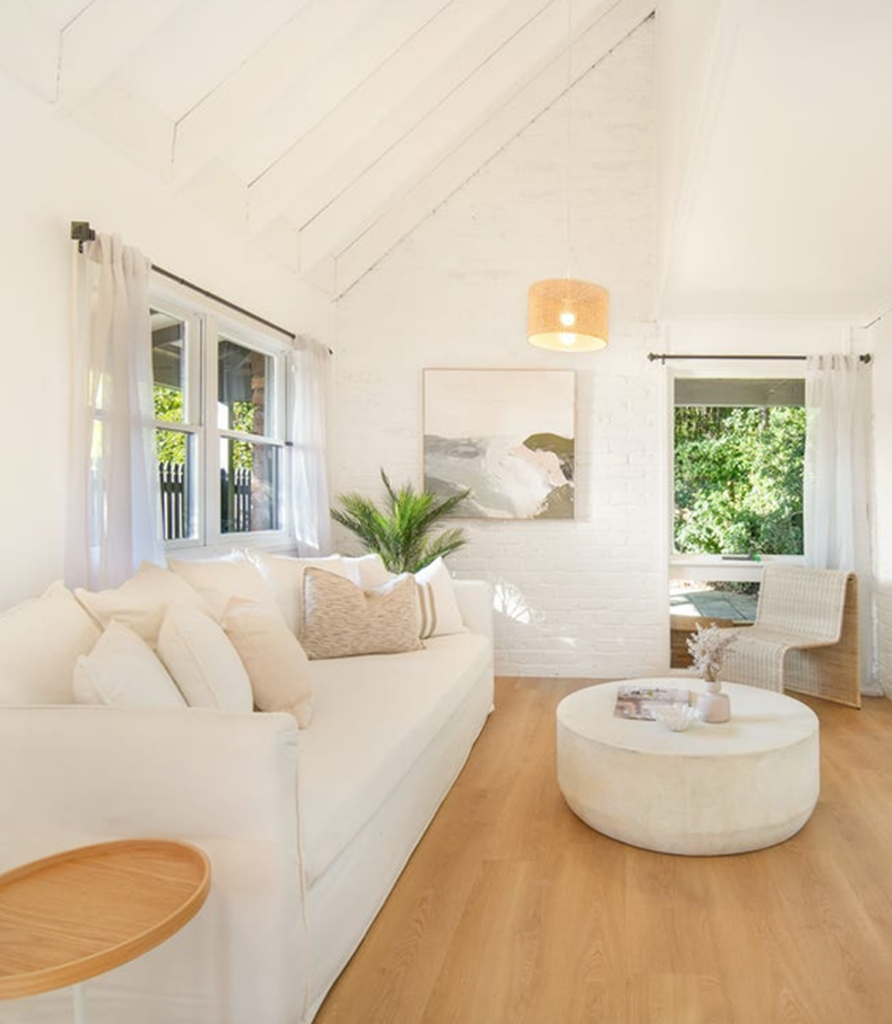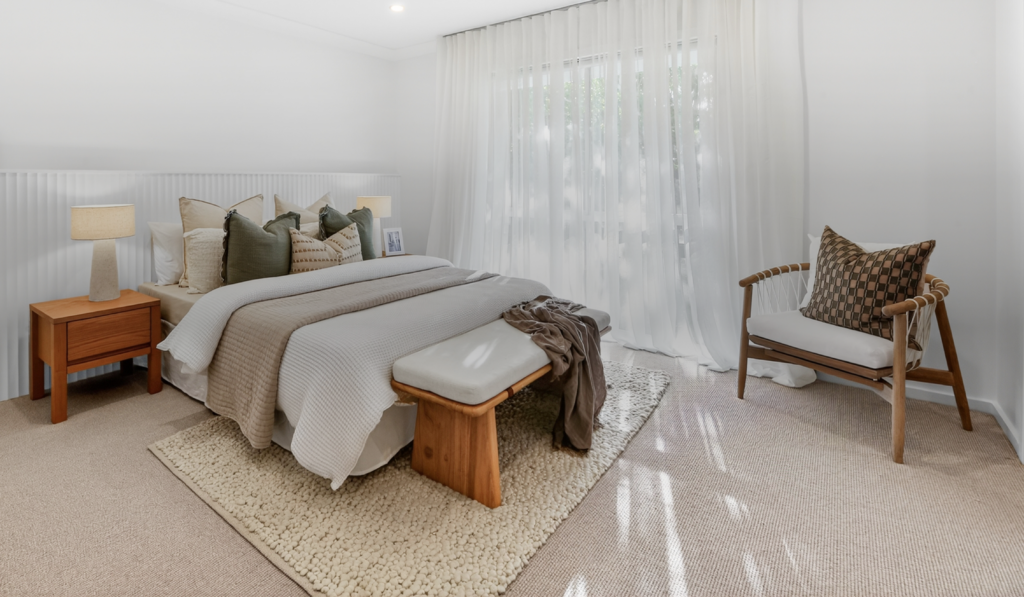
The look of coastal luxury interior design has quietly shifted, and if you’ve been planning a new build, renovation or restyle this year, you’ll have noticed it already. The glossy, white-on-white Hamptons interiors that dominated Australian coastal homes for nearly a decade have given way to something warmer, more tactile and far more confident. In 2026, the homes being photographed for design magazines and the strongest Gold Coast property listings are built around a layered conversation between texture, tone and timber.
From our Burleigh Heads studio, we’ve watched this shift happen across both ends of the brief. Owner-occupiers want spaces that feel resolved and grounded, not staged. Vendors going to market understand that buyers are responding emotionally to material quality, not floorplan square-metres. These are the materials genuinely defining the look this year.
1. Limewash and Roman Clay on the Walls
Flat painted walls are still the baseline, but the homes setting the standard for coastal luxury interior design in 2026 have moved to mineral finishes. Limewash and Roman clay give walls a soft, cloud-like depth that photographs beautifully under Queensland light. A limewashed wall has subtle tonal movement that reads as quiet luxury, where flat paint can look slightly cold on camera.
Tones leading the year are warm off-whites, putty, soft clay and the palest washed terracotta. Australian paint brands have been responding, with Haymes’ annual colour forecast consistently pointing toward grounded, earth-anchored palettes that work hand-in-hand with mineral wall finishes.
2. European Oak, Pale and Honest
If there is one timber defining 2026, it’s pale European oak. Wide-plank, brushed, with a matte oiled finish that lets the grain speak. The high-gloss dark timbers and orange-toned blackbutt of the previous cycle have stepped back. What’s replaced them feels lighter, calmer and quietly more expensive.
You’ll see European oak running underfoot as wide-board flooring, then echoed across joinery, in vanity carcasses, custom dining tables and benchtops. The reason it works so well in coastal luxury homes is consistency. When the same timber moves from floor to kitchen island to bedroom joinery, the home reads as a single considered project, not a collection of trend-driven rooms. It’s one of the most common briefs we receive through our Style to Stay consultations.
3. Travertine, Limestone and Honed Natural Stone
Marble has cooled. In its place, travertine and honed limestone are the stones defining the next phase of coastal luxury interior design. They have a softer, more sun-bleached quality that suits Gold Coast and Northern NSW homes far better than high-veined Calacatta ever did.
The strongest examples this year use travertine in unexpected places: chunky plinth coffee tables, vanity tops with integrated basins, fireplace surrounds and outdoor benches that continue inside without changing material. Honed (not polished) finishes are doing most of the work, because the matte surface absorbs harsh Queensland sun rather than bouncing it. Pantone has consistently flagged earth-anchored tones in its colour-of-the-year analysis, and you can see that same warmth pulled into the stone selections defining luxury Australian interiors.
4. Bouclé Has Matured Into Sculptural Upholstery
Bouclé hasn’t gone anywhere, but it has grown up. The pure-white bouclé tub chair that defined 2022 has been replaced by sculptural upholstered forms in oatmeal, mushroom, sand and pale clay. The silhouette matters more now than the fabric itself. Curved sofas with low backs, single statement armchairs that anchor a room, and rounded ottomans that double as side tables are dominating the brief.
For coastal luxury homes, the appeal is straightforward. A sculptural upholstered piece in a soft, undyed tone reads as both a furniture choice and a soft architectural element. It rounds out hard lines without introducing a strong colour, and it photographs beautifully against pale oak floors and clay-toned walls.
5. Linen, Heavy Cotton and Crumpled Texture
Soft furnishings have moved firmly toward the unfinished. Heavy washed linen on beds, slubby cotton on cushions, and softly crumpled curtains that fall in real folds rather than tailored pleats. The look is intentionally lived-in. A bed made up perfectly with hotel-style hospital corners reads as a showroom. A bed made up with washed linen, a textured throw and slightly crushed pillows reads as someone’s beautiful home.
This is one of the clearest signals of how coastal luxury interior design has matured. The previous decade favoured precision and uniformity. 2026 favours texture, slight irregularity and the kind of finish that suggests a stylist made considered choices and then let the room breathe. Publications like Belle have been documenting this textural shift across their feature homes for several seasons now.
6. Brushed Brass, Aged Bronze and Patinated Metals
Hardware finishes are doing real heavy lifting in 2026. Polished chrome and bright nickel feel dated against the warmer palette dominating the year. The strongest interiors are using brushed brass, aged bronze and patinated metals that pick up the warm tones in timber and stone. You’ll see this carried through tapware, cabinet pulls, pendant lights and even picture frames, all sitting in the same warm metal family.
The trick is restraint. Two metal finishes maximum, used consistently across a single room. When the metal palette is calm, the textural elements (limewash, linen, bouclé, oak) have space to do the work.
7. Indoor Greenery Used as Architecture
Plants are no longer accessories in coastal luxury interiors. They’ve become structural. A single oversized olive tree in a hand-thrown terracotta vessel, a sculptural fiddle leaf positioned to break a long sightline, or a low arrangement of dried palm and native eucalyptus on a travertine bench — these are the moves defining the year.
The shift here reflects something broader. Buyers and homeowners are responding emotionally to interiors that feel connected to the outside, and biophilic design (using natural elements to influence how a space feels) is becoming a deliberate part of how serious stylists are working. For vendors, getting this right before going to market is one of the cleanest ways to lift perceived property value, which is why we treat greenery and natural framing as standard inclusions on every Style to Sell installation.
How These Materials Come Together in Coastal Luxury Interior Design
The mistake we see most often is treating these materials as a checklist. They aren’t. Coastal luxury interior design works because every element is in conversation with every other. Limewashed walls need warm oak to anchor them. Oak floors need travertine to introduce a heavier mineral note. Travertine needs linen and bouclé to soften it. Linen needs brushed brass to lift it.
This is why the homes that photograph best, and sell fastest, tend to be the ones styled with a single creative direction from the beginning. You can see this layered approach across recent projects in our portfolio, where the same material palette has been pulled through homes in Burleigh Heads, Palm Beach, Kingscliff and Pottsville with subtle regional shifts.
Frequently Asked Questions
What is coastal luxury interior design?
Coastal luxury interior design is a style that draws on the relaxed feel of a beachside home but pairs it with high-quality, considered materials. In 2026, that means natural timber, honed stone, mineral wall finishes, sculptural upholstery and a warm neutral palette. The goal is a home that feels effortless and grounded, not staged.
How is 2026 coastal styling different from Hamptons styling?
Hamptons leans heavily on white-on-white interiors, navy accents and a formal, symmetrical aesthetic. Coastal luxury in 2026 is warmer, more textural and far less rule-based: oatmeal and clay tones replace cool whites, sculptural curved furniture replaces matching suites, and natural stone and limewash replace painted shaker cabinetry.
What colours work best for a coastal luxury home on the Gold Coast?
Warm neutrals work best under Queensland light: oatmeal, putty, soft clay, washed terracotta and pale oak tones. Cool whites tend to flatten in harsh sunlight, so most stylists in the region are leaning into warmer, earth-anchored palettes that flatter the way light moves through indoor-outdoor homes.
Can I get this look in a property I’m selling, not just one I’m living in?
Yes, and increasingly this is what vendors are asking for. A home styled with current coastal luxury materials photographs significantly better in listing imagery and tends to attract a higher calibre of buyer at open inspections. For a closer look at how this translates into a sale campaign, our companion piece on coastal staging trends shaping Gold Coast property sales goes into the styling side of the equation in detail.
Do I need to commit to every one of these materials?
No. The strongest interiors usually commit to three or four of these elements and execute them well. A limewashed wall, wide-plank oak floor, travertine coffee table and a single sculptural upholstered piece can carry an entire living room. The discipline is choosing fewer materials and using them consistently.
Final Thoughts
The materials defining coastal luxury interior design in 2026 share a common thread: depth, restraint and quiet confidence. None of them shouts. None of them dates themselves to a single trend cycle. When they’re layered well, the result is a home that photographs beautifully, lives comfortably and holds its value because it doesn’t read as last season the moment something else comes along.
If you’re planning a new build, renovation or styled-for-sale campaign and want to bring this material language into your home, our team works with both homeowners and vendors to translate it into something that fits the space, lifestyle and budget. Get in touch with the studio to start the conversation.