
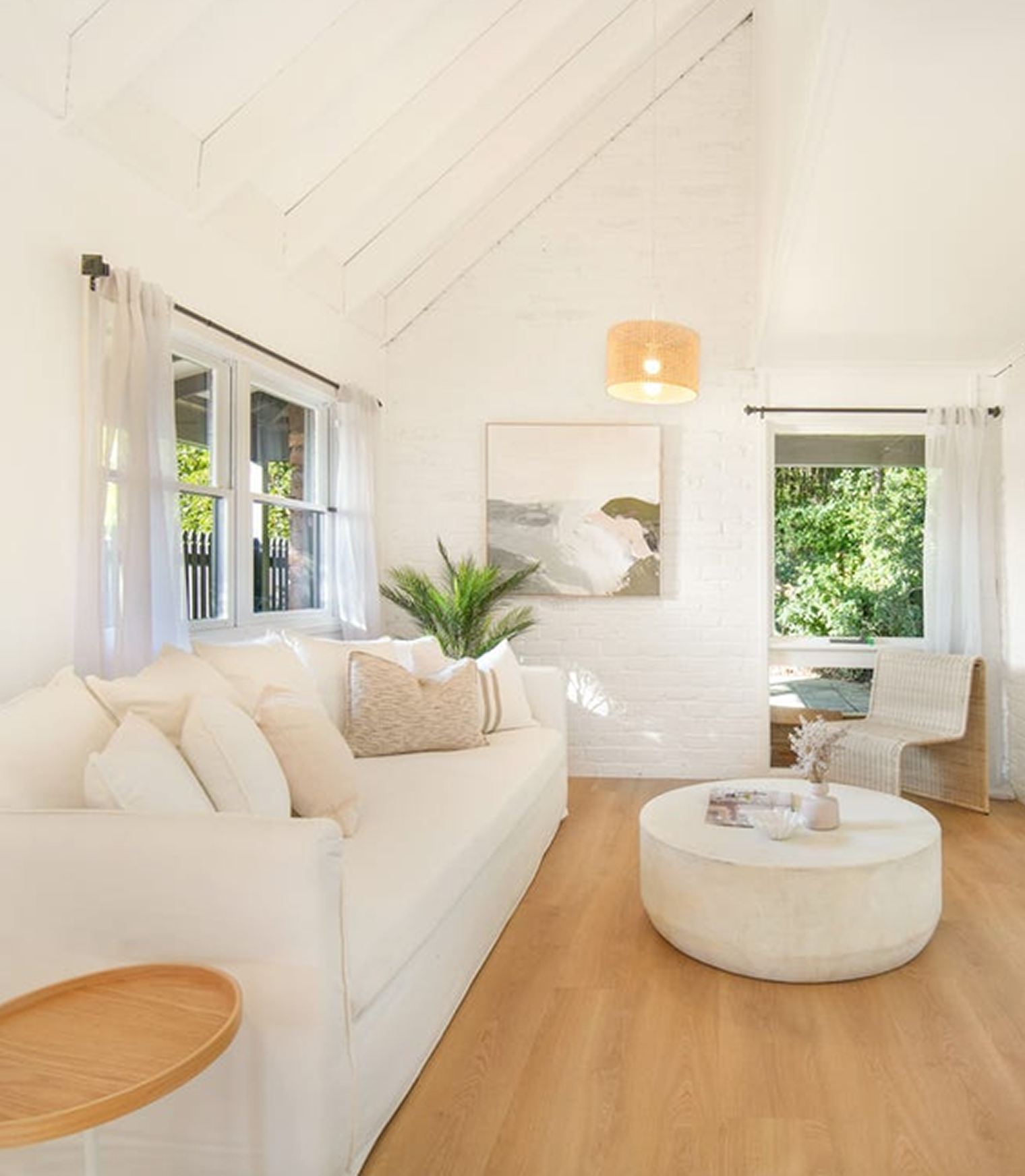
Preparing a home for market involves a long list of judgement calls, and few feel as debatable as styling. It is a real cost, paid upfront, at a time when money is already leaving your account for marketing, conveyancing, repairs and the move itself. So when an agent or stylist recommends professional presentation, most vendors quietly ask the same question. Does it actually pay for itself?
It deserves a better answer than “trust us”. This article sets out the property styling return on investment data worth seeing before you decide: what Australian agents report about styled sale prices, what the research says about buyer behaviour, what styling typically costs, and, just as importantly, what it cannot do.
Whether you are selling a family home in Burleigh Heads or an investment property in Kingscliff, the numbers below will help you treat styling as what it really is. Not a finishing touch, but a commercial decision with a measurable return.
Property Styling Return on Investment: What the Data Shows
The most useful Australian evidence comes from the people who watch homes sell every week. When LJ Hooker surveyed its top 50 agents, 98 per cent said styling a property to sell achieves a higher sale price. Of those agents, 83 per cent believed styling adds more than 2.5 per cent to the final figure, and more than half put the potential uplift at up to five per cent.
Percentages are abstract, so put them in dollars. On a $900,000 sale, an uplift of 2.5 per cent is $22,500. At five per cent, it is $45,000. Styling a home of that size typically costs a fraction of either figure, which is why agents who have seen hundreds of campaigns tend to treat presentation as a lever rather than a luxury.
Broader industry estimates land in similar territory. Reporting by Smart Property Investment puts the typical uplift from professional staging at five to ten per cent, and cites a six-year study of styled Brisbane homes that found an average premium of $69,017, with roughly 30 per cent of those properties achieving a premium above $100,000.
One honest caveat before going further. These figures come from agent surveys and industry studies, not controlled experiments, because no vendor ever sells the same home twice, once styled and once not. Treat the ranges as informed expectations rather than guarantees. Even read conservatively, though, the direction of the evidence is consistent: styled homes tend to sell for more, and the margin usually exceeds the fee several times over.
Where the Return Actually Comes From
Styling is often mistaken for decoration. The return, however, comes from psychology, not cushions.
Buyers do not purchase floor plans; they purchase a picture of their own life. The National Association of Realtors’ most recent Profile of Home Staging found that 83 per cent of buyers’ agents said staging made it easier for buyers to visualise a property as their future home. An empty room forces buyers to do that imaginative work themselves, and most cannot. A heavily personalised room does the opposite, showing them someone else’s life instead. Professional styling sits deliberately between the two: enough warmth to create feeling, enough restraint to leave space for the buyer’s own story.
The second mechanism is photography. Nearly every buyer now shortlists online, scrolling past dozens of listings in minutes, and the styled home is the one that stops the thumb. Better photographs earn more clicks, more clicks become more inspections, and more inspections build the thing that genuinely moves price: competition. In the LJ Hooker survey, 88 per cent of agents believed styling triggered multiple offers in private treaty campaigns and more bidders on auction day. The furniture never adds a dollar on its own. The second bidder it attracts adds plenty. You can see how this plays out room by room in our recent work across the Gold Coast and Northern NSW.
What Styling Costs, and the Maths of the Return
Full home staging in Australia typically costs between $2,000 and $8,000 according to industry pricing guides, which for most sellers works out to less than one per cent of the property’s value. The exact figure depends on the size of the home, the hire period, and whether you need every room furnished or only the key spaces. At Niche Design, that spectrum runs from partial styling of a lived-in home through to full and luxe staging of vacant properties, detailed on our Style to Sell page.
Here is what the return on a property styling investment looks like when you run the survey figures against a realistic budget. The example assumes a $900,000 home and a $6,000 styling package.
| Scenario | Uplift on $900,000 | Less styling fee | Return multiple |
|---|---|---|---|
| Conservative (2.5%) | $22,500 | $16,500 net | 3.7x |
| Mid-range (5%) | $45,000 | $39,000 net | 7.5x |
| Upper industry estimate (7.5%) | $67,500 | $61,500 net | 11.3x |
Even the conservative scenario, the one backed by 83 per cent of surveyed agents, returns the fee more than three times over. Very few decisions in a sale campaign offer that asymmetry: a capped, known cost on one side and an uncapped share of the sale price on the other.
The Speed Factor: Why Days on Market Are Money
Price gets the attention, but time on market quietly decides how much of that price you keep. In the same LJ Hooker survey, 92 per cent of agents believed styling influenced a quicker sale, and staging firms report styled properties selling around four weeks faster than the market average.
Four weeks matters more than it sounds. A listing that lingers starts to answer questions nobody asked. Buyers wonder what is wrong with it, agents field lowball offers, and the conversation drifts towards a price reduction, which usually costs far more than styling ever would. Meanwhile the holding costs keep running: mortgage interest, rates, insurance, utilities, and sometimes an extended marketing schedule.
There is also a rhythm to every campaign that vendors only get one chance to use. The largest, most motivated pool of buyers sees a listing in its first two weeks, when it appears in saved-search alerts and open-home schedules for the first time. Styling exists to make sure the home meets that audience at its absolute best, because that audience does not come back for a second look at a listing that failed to move them the first time.
The Rooms That Do the Heavy Lifting
Not every square metre earns the same return. The NAR research found the rooms most commonly staged are the living room (91 per cent), the primary bedroom (83 per cent) and the dining room (69 per cent), and that pattern is no accident. They are the spaces where buyers project their future evenings, their rest and their family table, and they are the spaces that dominate listing photography.
This is also why partial styling exists. If you are selling a lived-in home, a stylist can work with your existing furniture and concentrate hire pieces and finishing layers on the rooms that carry the campaign, which keeps the budget focused exactly where the data says the return concentrates. Vacant homes are a different case: empty rooms photograph poorly, feel smaller than they are, and give buyers nothing to hold onto, so whole-home staging almost always justifies itself there.
What Styling Cannot Do
A data-led article owes you the other side of the ledger, because styling is not a rescue package and treating it as one is how vendors end up disappointed.
Styling cannot correct an ambitious price. A beautifully presented home that is listed well above the market will attract admiration at open homes and silence at offer time. It cannot substitute for maintenance either. Buyers forgive dated decor far more readily than dripping taps, cracked tiles or scuffed walls, and styling placed over unresolved repairs tends to sharpen attention on them rather than hide them. If the budget forces a choice, complete the repairs first. And it cannot replace a well-run campaign: the right agent, honest appraisal and quality marketing remain the foundation.
Styling is best understood as a multiplier at the end of a well-prepared process. It amplifies a home that is priced correctly and properly maintained. It cannot disguise one that is not.
How to Protect Your Return
The gap between an average result and a strong one usually comes down to sequencing. Four habits protect the investment:
- Style before photography, not after. The photographs are the campaign. Booking the install ahead of the shoot means every dollar of styling works in every image, from the first online alert to the printed brochure.
- Keep the styling in place for the full campaign. The home should present identically at the final inspection and on auction day as it did in the photos. Consistency preserves trust at the exact moment buyers are deciding what to pay.
- Let your stylist and agent compare notes. A short conversation about the likely buyer, a young family, a downsizer, an interstate investor, lets the styling speak directly to the people who will actually bid.
- Solve the cash-flow question upfront. Styling is paid before the sale but returned at settlement, which is awkward timing for many vendors. Options such as our Style Now, Pay Later arrangement defer the styling fee until the property settles, so the investment and its return land in the same place.
A Note for Agents
For agents, the same data reads slightly differently. Styling is one of the few campaign variables that improves every other number you report to your vendor: click-through on the listing, inspection volume, engagement at opens, and depth of bidding. Recommending it early, with figures like the ones above rather than as a vague suggestion, positions you as a strategist protecting the vendor’s result. A working relationship with a local stylist who understands campaign deadlines makes that conversation easy to have, and we work alongside agents across the Gold Coast and Northern NSW to time installs around photography and launch dates.
Frequently Asked Questions
How much does property styling cost in Australia?
Full home staging typically ranges from $2,000 to $8,000 depending on the size of the property, the hire period and the level of finish, which is usually less than one per cent of the home’s value. Partial styling of a lived-in home costs less, since it concentrates on key rooms and blends hire pieces with your existing furniture. A consultation will give you an exact figure for your property rather than a range.
How much value does property styling add to a sale?
In LJ Hooker’s survey of its top agents, 83 per cent believed styling adds more than 2.5 per cent to the sale price, and more than half put the uplift at up to five per cent. Broader industry reporting suggests five to ten per cent is common for well-executed staging. No stylist can guarantee a percentage, because every home and market differs, but the surveyed range sits comfortably above the typical fee.
Do styled homes really sell faster?
The weight of evidence says yes. Ninety-two per cent of surveyed LJ Hooker agents believed styling produced a quicker sale, and industry reporting has styled properties selling around four weeks faster than average. A shorter campaign also protects your price by avoiding the low offers and price-reduction conversations that follow a stale listing.
Is property styling worth it if I still live in my home?
Usually, yes, through partial styling rather than a full install. A stylist assesses what your existing furniture can carry, then adds hire pieces, art and finishing layers to the rooms that dominate the photography and the emotional decision: living, dining and the primary bedroom. It is the most budget-efficient way to capture most of the uplift.
Can I style now and pay after settlement?
Yes. Niche Design offers Style Now, Pay Later, which defers the styling fee until your property settles, so nothing is payable upfront. It suits vendors who would rather fund the styling from the sale proceeds it helps to generate. Details are on our Style Now, Pay Later page, and we can walk you through it at your consultation.
Final Thoughts
So, does property styling really add value? On the available evidence, the return on investment is one of the most defensible in the entire selling process: a known, capped cost of a few thousand dollars set against a surveyed uplift of 2.5 to ten per cent of your sale price, a measurably faster campaign, and deeper competition among buyers. The vendors who are disappointed by styling are almost always the ones who used it to compensate for price or condition. The vendors who profit from it are the ones who treated it as the final multiplier on a well-prepared sale.
If you are weighing it up for your own campaign, start with a conversation rather than a commitment. Book a consultation and we will assess your property honestly, tell you which package fits, and show you exactly where the return will come from.


