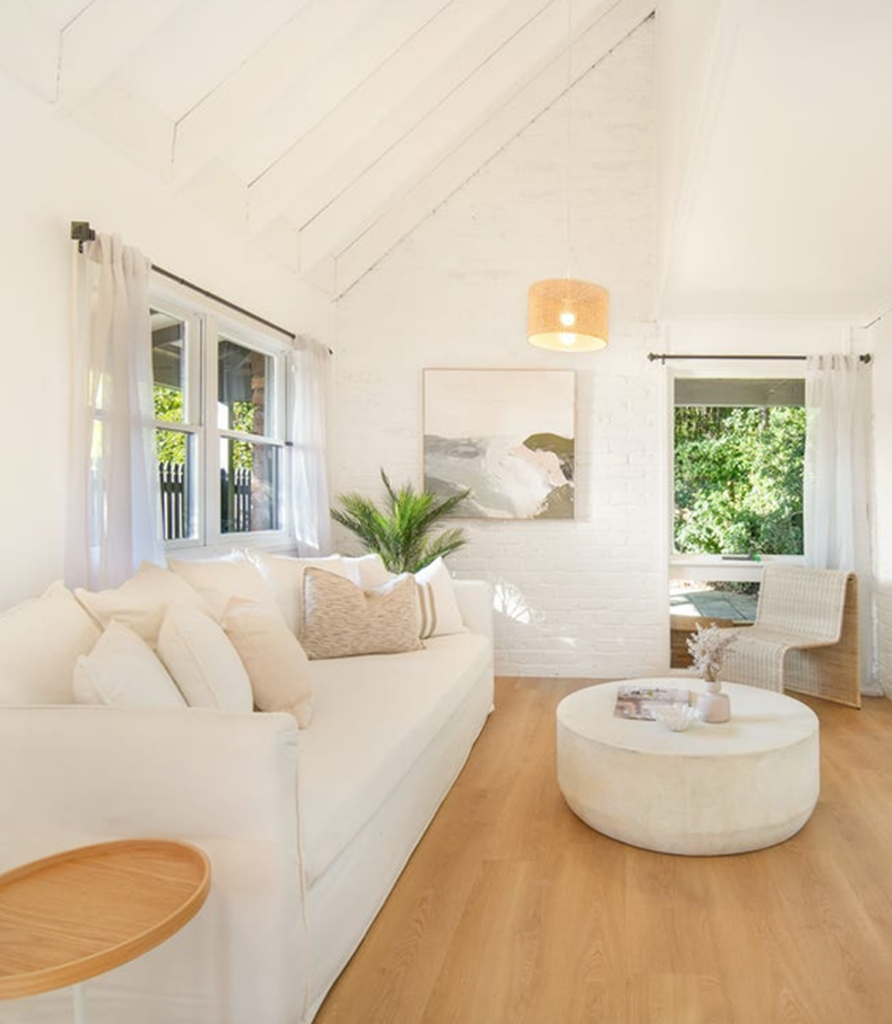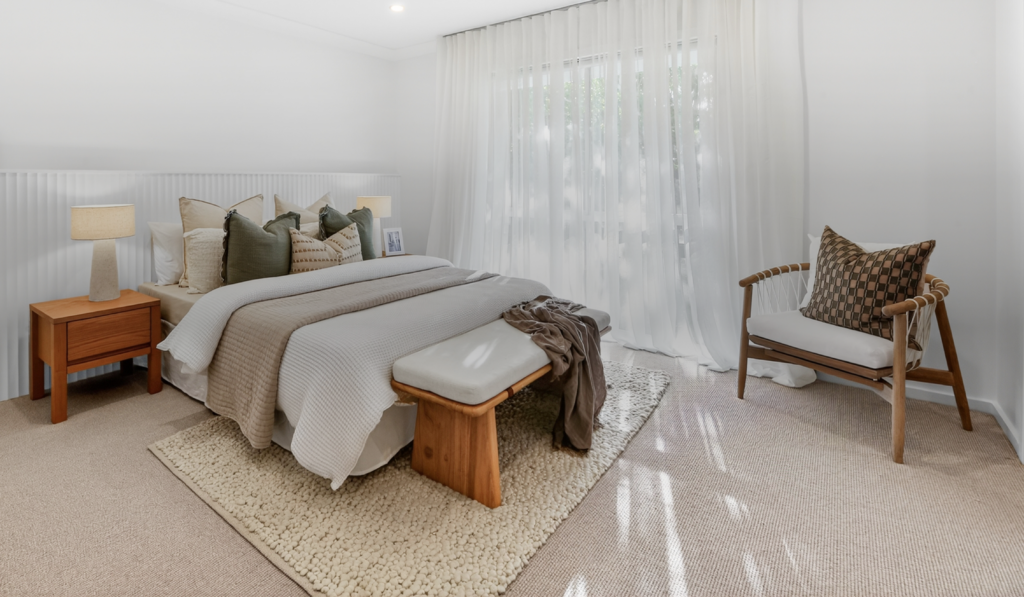
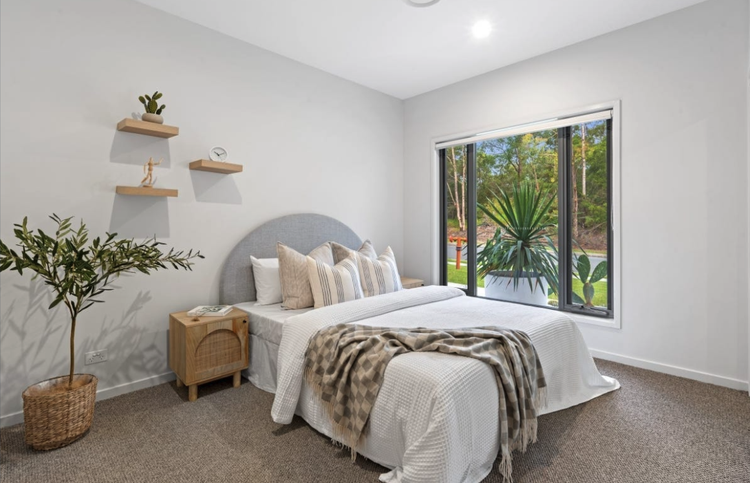
Walk through any newly styled home from Burleigh Heads to Kingscliff right now, and you’ll see the same thing: warm whites, washed timbers, linen everywhere, and a quiet, breezy calm that feels distinctly Australian. Coastal interior style in Australia has well and truly arrived as the dominant aesthetic for Gold Coast homes, and it’s not slowing down. What was once a holiday-house look has matured into something more considered, more liveable, and significantly more aspirational than its old “beachy” predecessor.
If you’ve found yourself saving Pinterest boards full of oatmeal sofas and timber-beamed ceilings, you’re in good company. Below is a breakdown of why the look has taken over, what makes the Australian version of coastal style different from the rest of the world, and exactly how to get the look in your own home without it feeling themed, dated, or like every other home down the street.
Why Coastal Interior Style Is Taking Over Australian Homes
The shift towards coastal interiors isn’t just a trend — it’s a response to how Australians actually live, especially in subtropical regions like the Gold Coast and Northern NSW. Three factors are driving the surge.
Climate-aligned design. Coastal style genuinely suits our environment. Pale palettes reflect harsh Queensland light, natural fibres breathe in humidity, and the indoor-outdoor architecture of most modern Gold Coast homes practically demands a style that flows from the living room to the alfresco without a visual jolt. Cooler European palettes or heavy traditional interiors fight the climate. Coastal works with it.
The Hamptons cool off. A decade of Hamptons styling has left Australian homes a little tired of navy shaker cabinetry and rope-knot lamps. According to Homes to Love and other major Australian interiors publications, homeowners are now gravitating toward a softer, warmer, less prescriptive interpretation, what designers are calling “modern Australian coastal” or “warm coastal.” It keeps the lightness of Hamptons but loses the formality.
Buyer and resident behaviour. Whether you’re styling to live or styling to sell, coastal interiors photograph beautifully on listing platforms and on Instagram, which matters more than ever. Buyers consistently respond to homes that feel calm, generous and lifestyle-driven, and coastal delivers all three with surprisingly little effort once you understand the rules.
What Makes the Australian Version Different
This is the part most homeowners get wrong. The American coastal look (think Cape Cod or Nantucket) leans heavily on nautical motifs, navy stripes, ship’s wheels and anchor decor. The Australian version is far more restrained. It draws from our actual landscape: bleached eucalyptus, sand, salt-weathered timber, sea grass, and the kind of soft, sun-faded light you only get on this side of the Pacific.
If you take one thing from this article, take this: Australian coastal style is about feeling like the beach, not looking like it. No starfish ornaments. No “Welcome to the Beach” signage. Just a quiet, layered nod to where we live.
How to Get the Coastal Interior Look in Your Gold Coast Home
Below are the seven elements every well-styled Australian coastal interior gets right. You don’t need to apply all of them at once. Even three or four done well will completely transform a room.
1. Anchor With a Warm, Neutral Palette
Forget cool whites and grey-blues. The contemporary Australian coastal palette is built on oatmeal, bone, soft cream, sand, putty and warm white. Add depth with brushed brass, soft clay, weathered timber and a single deeper accent (think charcoal, eucalyptus green or dusty terracotta). Cool palettes flatten under Queensland sun. Warmer neutrals add depth, hold up in photos, and make rooms feel larger and more inviting.
2. Layer Natural Materials Like You Mean It
Texture is doing the heavy lifting in modern coastal interiors. Aim to layer at least three to four natural materials in every room: washed linen, raw cotton, sisal or jute, rattan or cane, travertine or limestone, and unfinished or limewashed timber. The look is built on contrast between rough and smooth, matte and woven, soft and structural. A flat, glossy interior reads as a builder’s display. A textured interior reads as a lived-in lifestyle home.
3. Choose Furniture With Curves and Soft Shapes
Hard angles and matching three-piece suites are gone. The current coastal silhouette favours curved boucle armchairs, rounded sofa backs, low-slung daybeds, oval timber dining tables and pebble-shaped coffee tables. The visual effect is softness, interiors that feel like they exhale. For a Gold Coast home, this also reinforces the indoor-outdoor architecture: curved furniture echoes the natural lines of dunes, ocean and coastline.
4. Let Light Do the Work
Coastal interiors live or die on light. Maximise natural light wherever possible, use sheer linen or cotton curtains rather than heavy blockouts in main living spaces, and choose lighting in warm globe temperatures (2700K to 3000K). For pendants and lamps, look for woven rattan, paper, hand-blown glass or unlacquered brass. Avoid anything chrome, mirrored or overtly modern, as it instantly breaks the look.
5. Bring the Outdoors In
Greenery is non-negotiable. Modern Australian coastal interiors lean heavily on biophilic styling: large potted olive trees, fiddle leaf figs, dried palm fronds, native eucalyptus in oversized vessels, and trailing pothos in woven baskets. On the Gold Coast specifically, plants reinforce the connection between the home and its environment. They also soften hard architectural lines, which is essential in newer builds where everything can otherwise feel a bit too crisp.
6. Style Bedrooms as Retreats, Not Showrooms
The coastal bedroom should feel like the best room in a boutique hotel by the sea. Layer washed linen bedding in oatmeal or white, add a textured throw, hang one large piece of abstract or landscape art above the bedhead (not a gallery wall), and keep bedside styling intentional: one timber lamp, a hand-thrown ceramic, a stack of two books. Restraint is the whole point.
7. Edit Ruthlessly
The single biggest mistake people make with coastal style is over-styling. The look is meant to feel breezy and uncluttered, which means you need to remove more than you add. Clear surfaces of personal admin, group decor in odd numbers (three or five), and leave generous negative space. If a room feels finished but a little empty, you’ve usually got it right.
Common Mistakes That Ruin the Coastal Look
Even well-intentioned styling can tip into “themed” territory fast. The mistakes we see most often in homes across Burleigh Heads, Palm Beach and the wider Gold Coast:
- Going too literal. Anchors, shells, starfish, “Beach” signs: none of it. The look should evoke the coast, not announce it.
- Cold whites everywhere. They flatten under our light. Warm the palette up with oatmeal, sand and creamy whites instead of stark cool white.
- Matching furniture suites. A styled home should look curated, not catalogued. Mix shapes, finishes and timber tones.
- Skipping texture. Without natural materials, the palette reads as plain rather than considered. Texture is the look.
- Forgetting the alfresco. On the Gold Coast, your outdoor space is part of your living room. Style it like one.
For homeowners who want a professional take before committing to furniture purchases, our Style to Stay styling consultation walks you through palette, layout and product selection room by room, so the pieces you buy actually work together in your specific home. If you’re preparing to list, our Style to Sell service applies the same coastal styling principles to sale campaigns. You can also browse recent Gold Coast projects to see how the look translates into real homes.
Frequently Asked Questions
What is the Australian version of coastal interior style?
Australian coastal interior style is a softer, warmer and less literal interpretation of beach-inspired design. It draws from native landscape elements like bleached eucalyptus, sand, warm timbers and raw linen rather than nautical motifs. It’s been described as “warm coastal” or “modern Australian coastal” by Australian design publications, and is now the dominant aesthetic in Gold Coast and Northern NSW homes.
What colours work best for a coastal home in Australia?
Stick to a warm neutral palette: oatmeal, bone, sand, soft cream, putty and warm white. Add depth with one or two accent tones such as brushed brass, weathered timber, eucalyptus green or soft clay. Avoid cool whites and grey-blues, which tend to flatten under harsh Queensland light and date the look quickly.
Is coastal interior style only for beachfront homes?
Not at all. Coastal style works in any Australian home where you want a calm, light, lifestyle-driven feel, whether beachfront, hinterland, suburban or acreage. The look is about a mood and a palette, not your postcode. That said, it does feel most natural in subtropical climates like the Gold Coast, where the architecture tends to be indoor-outdoor focused.
What’s the difference between Hamptons and coastal style?
Hamptons is a more formal, American interpretation: navy and white, shaker cabinetry, classic mouldings, polished finishes. Modern Australian coastal is softer, warmer and less prescriptive, built on neutral palettes, natural textures and curved, sculptural furniture. According to Belle Magazine and other industry sources, Australian homeowners are increasingly moving away from Hamptons toward this warmer, more relaxed aesthetic.
Do I need to hire a stylist to get the look?
You can absolutely DIY a coastal interior with the principles above, especially if you’re styling one or two rooms. Where a stylist adds real value is in larger projects, whole-home styling, or when you’re investing in significant furniture pieces and want to make sure they work together long-term. A consultation usually pays for itself in the mistakes you don’t make.
Final Thoughts
Coastal interior style Australia has shifted from a niche aesthetic to the default look for Gold Coast homes, and the reason is simple: it suits how we actually live. Warm, light, layered and uncluttered, it photographs beautifully, lives easily, and feels distinctly Australian without ever tipping into theme-park territory.
If you’re styling a new home, refreshing a long-term property, or preparing to list, the principles above will get you most of the way there. And if you’d rather have a stylist do the heavy lifting, the team at Niche Design styles coastal interiors across the Gold Coast and Northern NSW every week. Get in touch for a quote, and we’ll walk you through what’s right for your home.