Buyer expectations have shifted, and the home staging trends Australia is responding to in 2026 look very different to what worked even two years ago. On the Gold Coast, where the coastal lifestyle is part of the property’s value proposition, generic styling no longer cuts through. Buyers walking through inspections (or scrolling through listing photos at 9 pm on their phones) are making faster judgments about whether a home feels right, and stylists are responding with a more grounded, lived-in coastal look.
If you’re preparing a Gold Coast or Northern NSW home for sale this year, these are the seven coastal staging trends shaping how the most successful listings are being styled, photographed and sold.
1. Warm Coastal, Not Cold Coastal
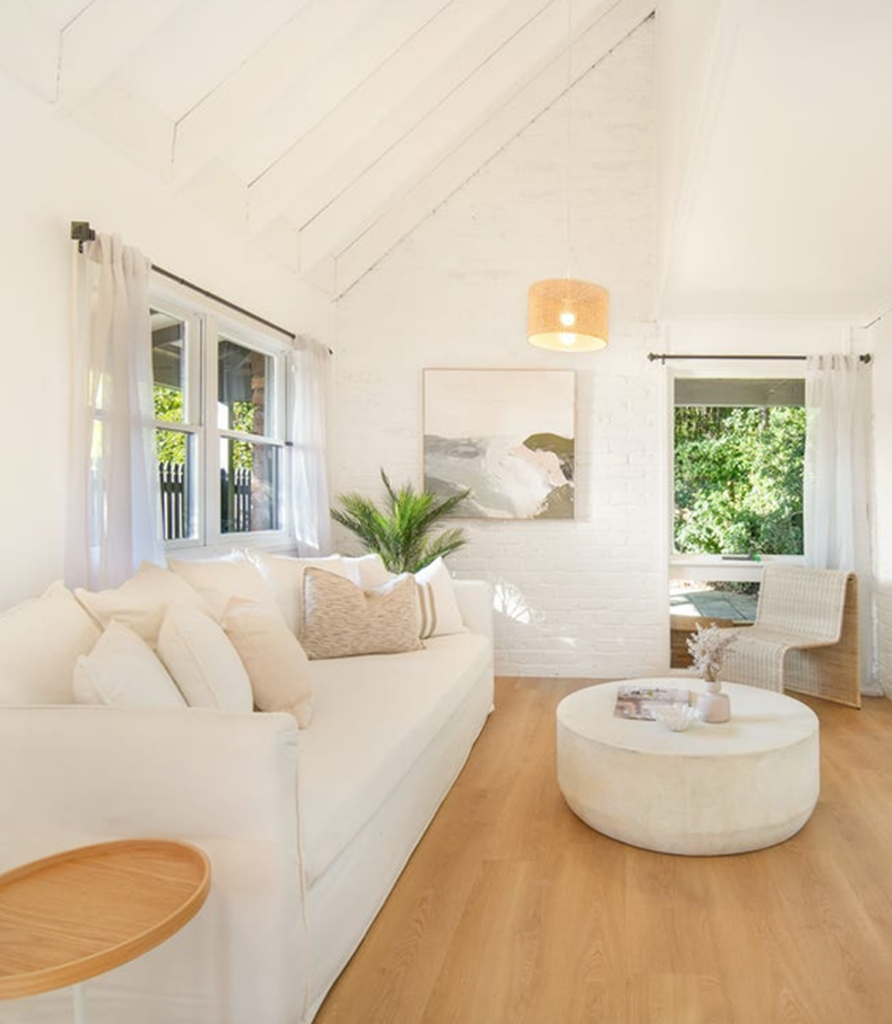
The crisp white-on-white “Hamptons by numbers” look has cooled off. In 2026, the dominant Gold Coast aesthetic is warm coastal: oatmeal linens, weathered oak, terracotta, soft clay tones and brushed brass. The palette still reads beachside, but it feels more inviting in photography and far more flattering under harsh Queensland light.
The reason this works for sales campaigns is simple. Cool whites tend to flatten in listing photos, while warmer neutrals add depth and make rooms look larger and more aspirational on a small phone screen, which is where most buyers first see your property.
2. Sculptural Furniture Over Matching Sets
One of the clearest home staging trends Australia-wide is the move away from matching three-piece suites toward curated, sculptural pieces. Think a curved boucle armchair next to a low timber daybed, or a single statement dining bench paired with mismatched chairs.
For vendors, this matters because a styled-to-match interior tends to look like a furniture showroom. A curated mix looks like a home someone wants to live in, which is what triggers an emotional connection at an open inspection. Niche Design’s portfolio of recent Gold Coast projects shows how this layered approach photographs in real coastal homes.
3. Texture as the New Colour
With palettes leaning neutral, texture is doing the work that colour used to do. The 2026 staged home leans heavily on bouclé, raw linen, washed cotton, hand-thrown ceramics, travertine, limewash walls and natural sisal or jute rugs.
This is especially powerful for the coastal market because texture suggests that “barefoot luxury” feel buyers are paying a premium for. A flat, glossy interior reads as new-build investor stock. A textured interior reads as a lifestyle.
4. Biophilic and Indoor-Outdoor Styling
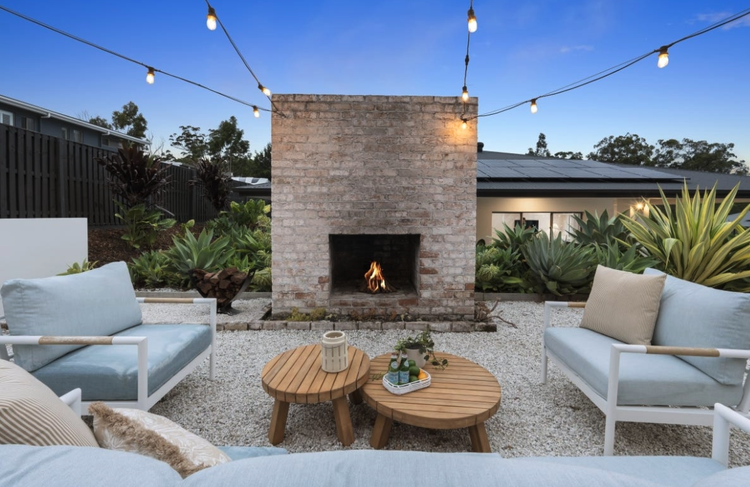
Gold Coast and Northern NSW homes already have the architecture for indoor-outdoor living, but staging is now consciously reinforcing it. That means styling the alfresco as a genuine second living room (not an afterthought with two folding chairs), running the same flooring tone or rug palette across the threshold, and using greenery to frame sightlines through the home.
Biophilic styling, including large potted olive trees, fiddle leaf figs, dried palm fronds and oversized vessels of native eucalyptus, softens hard architectural lines and makes a home feel established. Real estate selling experts consistently note that buyers respond emotionally to homes that feel connected to their environment, and on the Gold Coast, that connection is the whole point.
5. Bedrooms Styled as Retreats
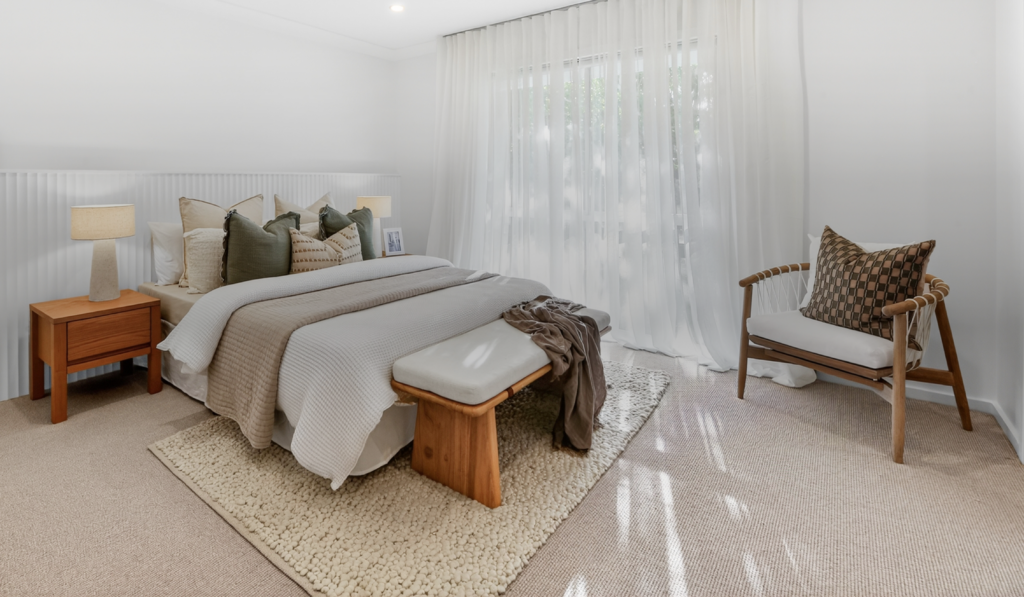
The 2026 master bedroom isn’t a bedroom; it’s a wellness retreat. Layered linen bedding in tonal whites and clays, a single oversized artwork above the bed, a textured throw at the foot, and bedside styling restricted to a lamp, a small stack of books and a ceramic vessel.
The trend has moved decisively away from heavily cushioned, hotel-style bed dressing. Buyers in the premium Gold Coast market want to imagine themselves slowing down, not staying in a five-star hotel for the weekend. Less is genuinely more, and the photography rewards it.
6. Functional Zoning in Open-Plan Spaces
Open-plan living is standard in modern Gold Coast homes, but it creates a staging problem: large empty rooms photograph as awkward and small. The 2026 response is clear functional zoning, where stylists use rugs, lighting and furniture grouping to define a reading nook, a TV lounge, a casual dining zone and a study corner inside the same space.
This solves a buyer’s biggest unconscious question, “how would I actually live here?”, before they have to ask it. According to CoreLogic property research, presentation and perceived liveability are consistently among the top factors influencing buyer offers in competitive markets.
7. Authentic Coastal, Not Themed Coastal: The Biggest Shift in Home Staging Trends Australia Saw This Year
The single biggest shift in coastal staging this year is the rejection of the “theme”. Anchors on the wall, ship’s wheels, blue-and-white striped everything and shells in glass jars are out. They date a home and signal to buyers that the styling is decorative rather than considered.
Authentic coastal styling in 2026 references the coast through materials and tone rather than motifs: weathered timber, pale stone, sun-bleached linen, rope detailing, and organic forms. The result is a home that feels coastal without announcing it, which is exactly the look buyers paying Gold Coast prices expect.
How These Trends Translate to a Real Sale Campaign
Trends are useful, but a styled home only sells faster if the styling is calibrated to the property, the price point and the target buyer. A Burleigh Heads beach house and a Robina family home need very different applications of the same coastal palette, and a stylist’s job is to make those decisions before installation day, not after.
That’s the entire premise behind Niche Design’s Style to Sell service, which tiers staging across Partial, Full and Luxe Stage packages so the level of investment matches the property and the campaign. The right tier, with the right pieces, is what turns a list of trends into a sale.
Frequently Asked Questions
Do staging trends actually affect how quickly a home sells?
Yes. Although styling alone doesn’t sell a home, it materially affects buyer perception, listing photo performance and inspection turnout. Industry bodies, including the Real Estate Institute of Australia, have long recognised presentation as one of the controllable levers vendors have during a campaign, alongside pricing and agent selection.
How much should I budget for property styling on the Gold Coast?
Costs vary based on home size, the number of rooms styled, and the hire period. Partial stages are typically the entry point, with full and premium tiers scaling up for larger or higher-priced homes. Most Gold Coast stylists, including Niche Design, offer staged pricing tiers and finance options like Style Now, Pay Later, so the cost can be settled at sale rather than upfront.
Should I follow the trends or stick with a classic look?
A trend-aware stylist isn’t styling for fashion; they’re styling for the buyers who’ll walk through next month. Following current home staging trends Australia-wide ensures the listing photos compete with everything else on realestate.com.au, while a “classic” look risks photographing as dated. The goal is contemporary, not trendy.
How long before listing should styling go in?
Most Gold Coast vendors style 5–10 days before professional photography and listing launch, with the styling kept in place across the full campaign and open inspection period. Your stylist will coordinate timing with your agent and photographer.
Final Thoughts
Coastal styling has matured. The 2026 Gold Coast market is rewarding homes that feel warm, layered, lived-in and grounded in their environment, and punishing homes styled with last decade’s beach-house playbook. The vendors getting strong results aren’t chasing trends for their own sake; they’re working with stylists who understand which trends translate into competitive listing photos and faster offers. If you’re preparing a Gold Coast or Northern NSW property for sale and want a styled space that reflects where the market is heading, get in touch with the Niche Design team for a styling consultation tailored to your home and campaign.